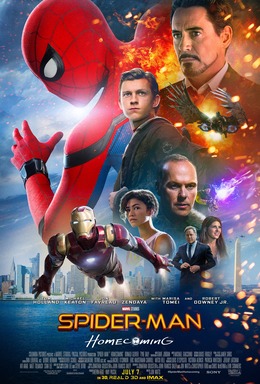
Spider-Man: Homecoming: The MCU's 16th Film and Landmark Reboot
In the vast tapestry of the Marvel Cinematic Universe (MCU), certain films stand out not just for their box office success or critical acclaim, but for their pivotal role in shaping the franchise's future. Spider-Man: Homecoming, released in 2017, unequivocally belongs to this elite category. As the 16th film in the MCU and a significant reboot for one of Marvel's most beloved characters, it successfully ushered Peter Parker into a new era, balancing high school woes with burgeoning superhero responsibilities. This cinematic venture wasn't merely another Spider-Man story; it was a fresh, grounded take that capitalized on the character's recent, sensational debut in Captain America: Civil War, firmly embedding him within the interconnected world of the Avengers.
The film brilliantly navigated the complexities of Peter Parker's newfound identity, offering audiences a more youthful and relatable portrayal than ever before. With Tom Holland in the titular role, Spider-Man: Homecoming delivered a vibrant mix of action, humor, and coming-of-age drama, setting a new benchmark for how a classic superhero could be reimagined for a modern cinematic universe. It was a testament to the collaborative efforts of Marvel Studios and Sony Pictures, proving that even a character with multiple big-screen interpretations could feel utterly fresh and exciting again.
A High School Hero's Journey: Peter Parker's MCU Identity
One of the most compelling aspects of Spider-Man: Homecoming is its unwavering focus on Peter Parker as a high school student first, and a superhero second. Following his exhilarating albeit brief escapade with the Avengers during the airport battle in Civil War, Peter returns to his normal life in Queens, a life that suddenly feels incredibly mundane. He's thrilled by his experience, buzzing with energy, and desperate to prove himself worthy of the "next big mission" he believes Tony Stark will surely offer. This internal conflict—the desire for grandeur versus the reality of daily life—forms the emotional core of the film.
Living with his Aunt May (Marisa Tomei), who is wonderfully portrayed with a fresh, more youthful energy, Peter grapples with the typical challenges of adolescence: juggling classes, navigating social circles, and harboring a crush on a classmate. Yet, beneath this veneer of normalcy, he's secretly honing his web-slinging skills, using his advanced Stark Industries suit to patrol the neighborhood and assist citizens with petty crimes. The film excels at showing his learning curve, his mistakes, and his genuine enthusiasm, making him incredibly endearing. He's not yet the seasoned hero; he's a teenager with incredible powers trying to figure out where he fits in the world, both with his peers and among Earth's mightiest heroes. This grounding of the character, exploring his identity not just as Spider-Man but as Peter Parker, was crucial for the MCU's vision. For a deeper dive into this character development, explore How Spider-Man: Homecoming Defined Peter Parker's MCU Identity.
Practical Tip: When introducing a well-known character, focusing on their relatable human struggles—like Peter's high school anxieties—can make them more accessible and build a stronger connection with the audience, even for long-time fans.
Mentorship, Morality, and the Vulture's Menace
The relationship between Peter Parker and his reluctant mentor, Tony Stark (Robert Downey Jr.), forms another foundational pillar of Spider-Man: Homecoming. Stark, having introduced Peter to the superhero world, feels a sense of responsibility for the young prodigy. He provides Peter with a high-tech suit, complete with an AI assistant named Karen, but also sets strict boundaries, advising him to "stay on the ground" and focus on being the "friendly neighborhood Spider-Man." This dynamic creates a compelling tension: Peter yearns for independence and to prove his worth on a larger stage, while Tony, haunted by his own past mistakes and the dangers of superhero life, tries to rein him in. It's a classic father-figure dynamic, imbued with Stark's signature wit and Peter's youthful exuberance.
This mentorship is tested by the emergence of Adrian Toomes, also known as the Vulture, masterfully portrayed by Michael Keaton. Toomes is not a cosmic threat or a maniacal supervillain in the traditional sense; he's an ordinary man driven to villainy by economic desperation and a sense of betrayal by powerful figures like Tony Stark. After his salvage company is put out of business by Stark's clean-up operation post-New York invasion, Toomes turns to illicit arms dealing, using Chitauri technology to create advanced weaponry for himself and his crew. The Vulture represents a unique challenge for Peter, not only because of his formidable tech and personal connection to Stark, but because his motivations are alarmingly grounded and understandable, blurring the lines of good and evil. He threatens not just Peter's superhero aspirations but everything Peter holds dear, including his loved ones.
The film expertly intertwines Peter's personal life with the Vulture's schemes, culminating in a shocking revelation that ties Toomes directly to Peter's civilian world, raising the stakes exponentially. This intricate dance between mentor's guidance and the challenge posed by a formidable, morally complex foe is a highlight of the film. To delve deeper into this critical relationship and conflict, refer to Tony Stark's Guidance: Peter Parker's Battle Against The Vulture.
Behind the Web-Slinging: Production and Integration into the MCU
The journey of Spider-Man: Homecoming to the big screen was a significant industry event. It marked the culmination of a landmark agreement between Sony Pictures Releasing, which holds the film rights to Spider-Man, and Marvel Studios, allowing the character to finally be integrated into the Marvel Cinematic Universe. Produced by Columbia Pictures, Marvel Studios, and Pascal Pictures, this film was the second Spider-Man film reboot (following The Amazing Spider-Man series) but the first to exist within the established MCU continuity.
Directed by Jon Watts, who brought a fresh, indie sensibility to the blockbuster, the film's screenplay was a collaborative effort by multiple writing teams, including Jonathan Goldstein and John Francis Daley, Watts and Christopher Ford, and Chris McKenna and Erik Sommers. This multi-faceted approach contributed to the film's rich dialogue, sharp humor, and well-paced narrative. The casting of Tom Holland was pivotal, offering a younger, more energetic Peter Parker who perfectly embodied the high school setting. Alongside Holland and Keaton, the film boasted a strong supporting cast, including Marisa Tomei as a spirited Aunt May, Jacob Batalon as Peter's best friend Ned, and Zendaya as Michelle "MJ" Jones, all contributing to the film's authentic high school vibe.
As the 16th film in the MCU, Spider-Man: Homecoming had the unique challenge and opportunity to build upon existing lore while simultaneously launching a new franchise. It skillfully wove in references to other Avengers, featured cameos, and continued narrative threads without overwhelming its central story. This seamless integration was a triumph, proving that beloved characters could coexist across different studio banners, much to the delight of fans worldwide.
The Enduring Legacy of Spider-Man: Homecoming
Spider-Man: Homecoming succeeded remarkably by understanding the core appeal of the character: a teenager trying to do the right thing, often clumsily, with great power and even greater responsibility. The decision to skip another origin story, already well-known to audiences, allowed the film to dive straight into Peter's post-powers life, focusing on his personal growth and his struggle to find his place.
The film's tone—a delightful blend of John Hughes-esque high school comedy and thrilling superhero action—struck a chord with both critics and audiences. It received widespread praise for its fresh approach, Holland's performance, Keaton's compelling villain, and its genuine humor. Spider-Man: Homecoming effectively revitalized the Spider-Man franchise, proving that a character who had already graced the big screen multiple times could still offer new perspectives and engaging narratives. It set the stage for Peter Parker's subsequent appearances in major MCU crossovers and his own sequel trilogy, firmly cementing Tom Holland's Spider-Man as a definitive iteration for a new generation.
Interesting Fact: The film deliberately chose not to show Peter's iconic spider-sense in full effect for much of the movie, symbolizing his nascent powers and lack of experience, and emphasizing his reliance on Stark tech before truly learning to trust his own abilities.
In conclusion, Spider-Man: Homecoming was more than just another superhero movie; it was a landmark event that reshaped the cinematic landscape for one of Marvel's most iconic heroes. By grounding Peter Parker in his high school reality, presenting a relatable villain, and seamlessly integrating him into the larger MCU, the film delivered a refreshing and enduring take on Spider-Man. It underscored the character's timeless appeal and demonstrated the boundless possibilities when creative minds collaborate to tell compelling stories within an interconnected universe.